
Arusha National Park
Envision seeing giraffes, buffalo, and other animals on the slopes of Mount Meru which is Tanzania’s second highest peak and also the immaculate woods teeming with colobus monkeys. All these are found in Arusha National park that is one of Tanzania’s smaller parks.
Arusha National Park which was formerly known as Ngurdoto Crater National Park, is situated in Northern Tanzania just 25 kilometers east from Arusha, 35 kilometers from Kilimanjaro International Airport, and 58 kilometers from Moshi. The park is recognized for being the world’s largest giraffe population. Arusha National park spans an area of 137 square km protecting some areas like Ngurdoto crater and Mount Meru.
The protected area which was initially established as Ngurdoto Crater National Park in 1960 and renamed Arusha National Park in 1967 was formerly inhabited by the Warusha people is the source of the name Arusha. Numerous tourism amenities, like as picnic areas, campgrounds, and lodges, are available at Arusha National Park to make tourists feel more comfortable.
It is home to rare species that are not found in other Tanzania national parks in the Northern circuit, such as luxuriant rain forests, savannah, and alpine vegetation. It is also renowned for its unique walking and boat safaris plus rich birdlife.
Birding in Arusha National Park
You can take a day off from the busy town of Arusha and head to this park to watch beautiful birds. Birdwatching is superb in this park since there are over 400 bird species. You can encounter pink flamingos, silvery-cheeked hornbills, grey-crowned cranes, yellow-throated sandgrouse, crested francolin, and many more.
Every rainy season, migratory species stop in the dense forest of this park for breeding. From March through April, the park has beautiful melodies from these migratory species.
When you should visit depends on your timeline. Arusha National Park is good year-round, though the dry season seems good. The dry season (June to October) is good for wildlife viewers. The grass is short, and animals gather around water sources to quench their thirst. This makes wildlife viewing easier.
If you want to see plenty of birds, then visit Arusha National Park between February and April. However, it might be difficult to navigate through some roads due to heavy rains. Also, pack heavy layers, quick-drying clothes, and a rain poncho to protect against rain.
Are you ready to discover Arusha National Park? Try a short day tour of this wonderful park. If you still have further questions, contact our safari experts.
Vegetation of Arusha National Park
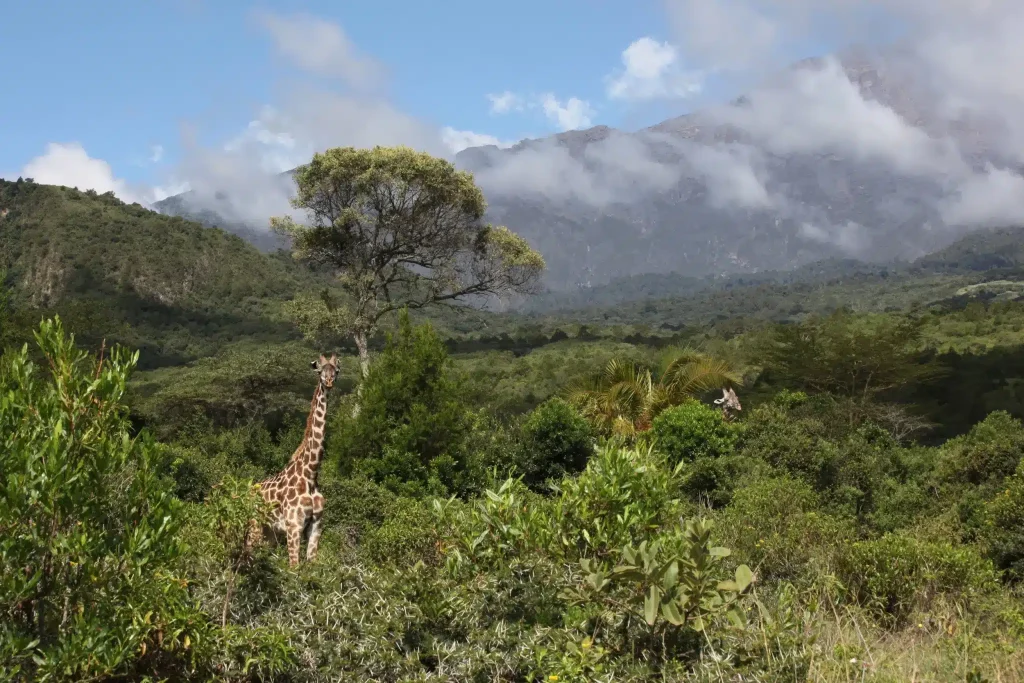
A variety of vegetation can be found in Arusha National Park for example, savannah vegetation that dominates the lower regions of the park which is typified by open grassland regions dotted by acacia forests this portion hence supporting a variety of herbivores and are dispersed with plants like whistling thorns. While the slopes of Mount Meru are covered with montane forest that is dominated by species like podocarpus, olive trees, fig trees, and juniper. Therefore, the forest is lush, damp, and home to epiphytic species including orchids and mosses.
The Lower montane forest feature a mix of evergreen and deciduous forests and around the Ngurdoto crater there is tropical vegetation typified by marshes, swamps, and grassy plains bordered by wooded slopes. Also, Wetlands and marshy vegetation encompass the Momella lakes with their edges include long grasses and aquatic vegetation like papyrus and on the slopes of Mount Meru, the vegetation transforms into alpine vegetation featuring hardy shrubs, heathers, and grasses with species like gigantic groundsels and lobelias that are supported by the alpine vegetation.
Tourist Attractions In Arusha National Park
Despite being smaller than some of the other main Tanzanian parks, Arusha National Park is well known for its distinctive and varied array of species, especially its ungulates and primates, which flourish in its many habitats, abundant bird life, mountain Meru, Momela lakes, Ngurdoto, mini Serengeti, Ujambo wa mbogo “ buffalos glade’’ , fig tree among others. Below are the attractions found in Arusha National Park;
-
Wildlife.
- Arusha national park is bestowed with abundant wildlife species like the greatest number of giraffes in the world is found in Arusha National Park. Other wild creatures include; elephant, Cape buffalo, Warthog, bush pigs, waterbucks, bush bucks, duikers, dik- dik, spotted hyenas, leopards and lions. It also has signature species compassing f primates like Black and white colobus and blue monkeys that are inhabitants in the park. The park also hosts to 400 different bird species among which encompass endemics, woodland and migratory birds like Flamingos, yellow billed storks, Great crested grebe, Egytian goose, Cinnamon chested bee-eater, African fish eagle, Peregrine falcon, Verreaux’s eagle, Black saw-wing, Tawny eagle, African olive pigeon, Hartaub’s turaco, Red –fronted parrot, Bearded vulture, scaly francolin, Bar-tailed trogon, Narina trogon, silvery cheeked hornbill, white browed coucals, bronzy sunbirds and red billed oxpeckers.
- The Ngurdoto crater that is termed as little Ngorongoro is one of the most widely recognized and picturesque tourist destinations in Arusha National Park. It is referred to as little Ngorongoro due to its similarities to the bigger and more famous caldera in Ngorongoro crater, hence offering a unique and lush animal watching experience. The Ngurdoto Crater is a collapsed volcanic caldera that is effectively an extinct volcano which erupted between 1 and 3 million years ago. It covers around 3.6 kilometers at its widest point and is about 100 to 300 meters deep.
- The crater is basin-shaped with extremely steep, forest-covered sides and the floor is coated with a lovely combination of marshy grassland and evergreen wetlands, which serves as a grazing site for big herds of buffalo and other animals. The various ecosystems of the crater sustain an array of wildlife, which makes it a great location for game viewing and birding include: mammals like Cape buffalo, which are frequently observed munching in the marshy areas, elephants (though they can be elusive), warthogs, baboons, bush pigs, reedbucks, and duikers. Although they are not frequently seen, leopards and spotted hyenas are also present.
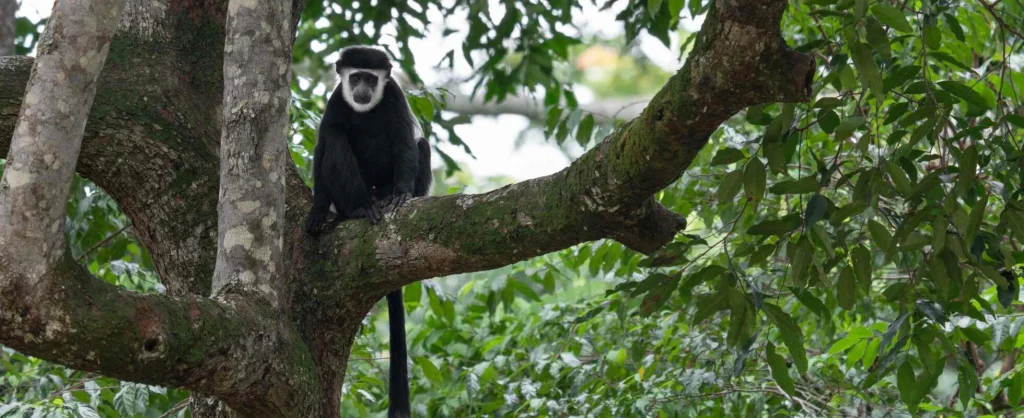
- It also features primates including Black-and-White Colobus Monkeys, which are one of the park’s biggest attractions, along with blue monkeys. With more than 400 species, the region is a birdwatcher’s paradise. You can observe raptors like the Augur Buzzard and Verreaux’s Eagle soaring above the rim, as well as many woodland and water birds.
Dense rainforests with trees like date palm, olive, and mahogany as well as epiphytic species like orchids and mosses are fostered by the humid atmosphere.
Mount Meru.
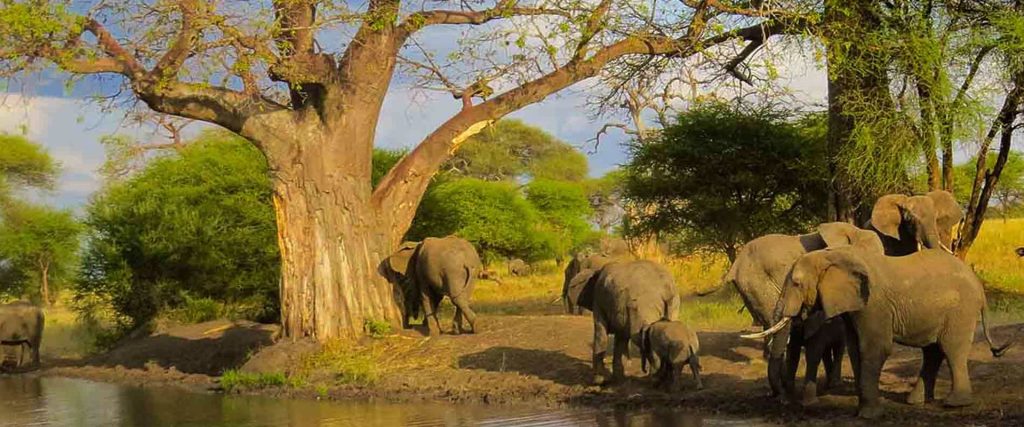
- Standing at 4,566 meters above sea level, Mount Meru is the second-highest mountain in Tanzania. It is a stunning, dormant stratovolcano that serves as the dramatic focal point of Arusha National Park presenting a unique and spectacular trekking and wildlife experience in its own right. The last significant eruption of Mount Meru is thought to have occurred approximately 7,800 years ago, which caused the eastern side of the cone to collapse therefore creating a dramatic, horseshoe-shaped crater and caldera, one of the mountain’s most distinctive geological attributes.
- A smaller but still flawless cone of cinders and ash, dubbed as the Ash Cone, has developed within the caldera and is a spectacular sight from the top rim. The whole mountain is located around 70 kilometers west of Mount Kilimanjaro and inside the borders of Arusha National Park.
- Given that it provides climbers with exposure to high altitude and multi-day trekking, Mount Meru is a great preparation or acclimatization climb for those preparing to attempt Mount Kilimanjaro. The trail is renowned to be exceedingly steep, especially the last summit push, making it a tough physical test. The views of Mount Kilimanjaro floating above the clouds from the Meru top are spectacular.
The Momella lakes
- The Momella Lakes are a group of seven small and alkaline lakes in the park’s northeastern region rather than a single body of water. The different lakes include Big Momela, Small Momela, El Kekhotoito, Kusare, Rishateni, Lekandiro, and Tulusia. The Momella Lakes are renowned for their distinctive hues, abundant wildlife, and gorgeous setting hence making them breathtaking and essential component of Arusha National Park.
- The dormant volcano that dominates the park’s western horizon, Mount Meru, had its top blown away by a cataclysmic eruption some 250,000 years ago, leaving behind volcanic debris. Every lake has a distinct color, ranging from green to blue and turquoise, and is supplied by subterranean springs. The distinct kinds of algae that flourish in the various alkaline waters and the fluctuating mineral concentration are the causes of this remarkable color variance.
- The water’s alkaline (salty) composition renders it unfit for most animals to drink. However, this extreme salinity is what attracts and maintains the abundant aquatic life and bird species present here like flamingos, African fish eagles, pelicans, herons, Egyptian geese. It also has creatures like hippos, giraffes, zebras.
Ujambo wa Mbogo.
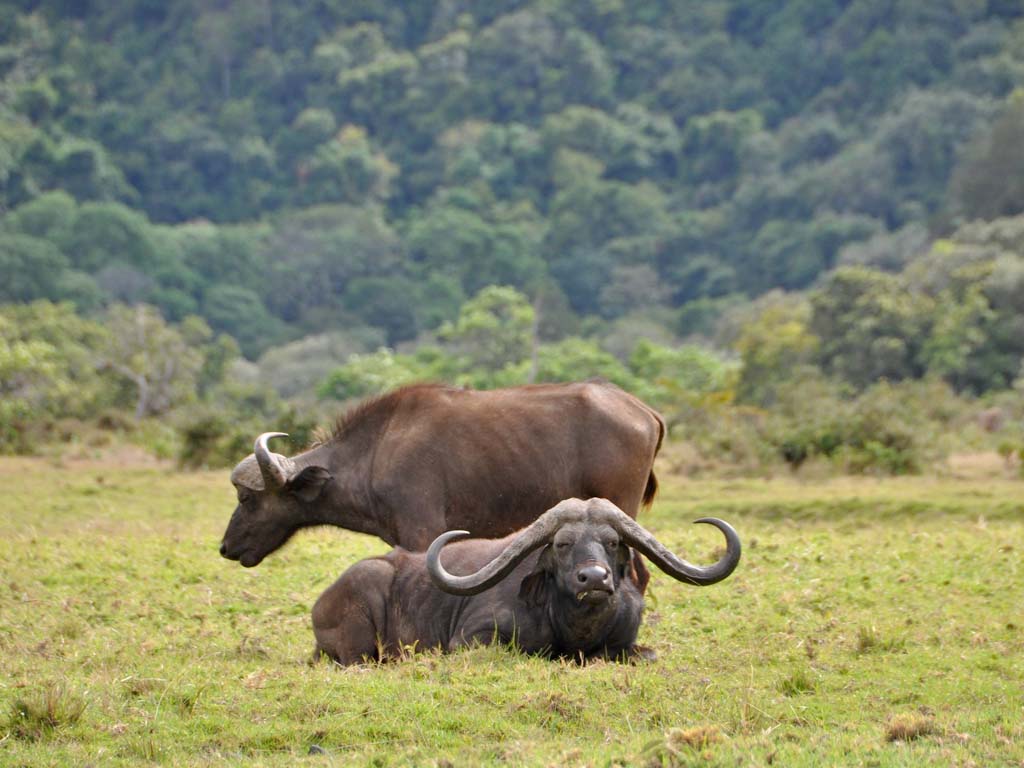
- Ujambo wa Mbogo lies in the northeastern part of Arusha National Park is found a little distance west of the Momela Gate, which is the major entry on the eastern side of the park. As a “Glade,” it is distinguished by an open, naturally occurring grassland that resembles a savanna and is dotted with marshes, shrubs, and streams. This makes it a good feeding site for huge herbivores including Cape Buffalo, the Masai Giraffes, Warthogs. It is located between the Momela Lakes region and Mount Meru’s lower slopes, offering it a magnificent setting that typically includes views of the peak.
Mini Serengeti.
- The “Mini Serengeti,” formally known as Serengeti Ndogo represents one of the distinguishing and attractive features inside Arusha National Park in Tanzania. It is situated within the Arusha National Park, close to the Ngurdoto Craterand it is frequently among the first things guests see when they enter the park via the Ngongongare Gate.
- In contrast to the park’s hillier, volcanic, and forested areas, the area was originally intended to offer an open, accessible environment for grazing animals.
- Herds of grazing animals congregate in the Mini Serengeti’s broad grasslands, which makes for great game-drive possibilities for several of the park’s species, including plains zebras, giraffes, Cape buffaloes, warthogs, waterbucks, and elephants.
The Fig tree Arch.
- The Fig Tree Arch remains one of the most unusual and famous tourist attractions in Arusha National area which makes it an essential stop for most visitors to the region. The tree is a big fig more precisely, a Strangler Fig whose enormous, winding roots have naturally fused together to form a hollow archway over time. The aperture is wide enough for a safari vehicle to pass below, making it a beautiful and popular photo opportunity. This special ability, which enables an car to pass through a tree, is extremely uncommon. The tree originated as a seed deposited above on a host tree by a bird. The fig’s aerial roots extended beneath the ground, slowly engulfing and choking the host tree, which finally perished and leaving behind the hollow, towering fig tree arch.
Tourists may stop, exit their car (guided by a ranger, as this is a national park), and explore the tree up close, marveling at its incredible size and complicated root structure.
Activities to Participate in Arusha National Park
Because of its diversified landscapes, which include Mount Meru, the Momella Lakes, and the Ngurdoto Crater, Arusha National Park often considered as a hidden gem, it offers a wide range of activities beyond the typical game drive as mentioned below.
- Game drives. Arusha National park lacks the enormous predator populations in comparison to other parks, while here you may readily identify giraffes, Cape Buffalo, zebras, warthogs, waterbucks, and antelopes. The “Little Serengeti” region is wonderful for animals that graze making it a best point for wildlife viewing in your 4WD car.
- Walking Safaris. It serves as one of the park’s primary attractions, as it’s one of the few spots on the Northern Safari Circuit where guests can stroll freely while escorted by an armed ranger. Giraffes, buffalo, and zebras are among the creatures you can get up close to and learn about the finer points of the ecology. The trails frequently pass through forests and lead to landmarks like the Fig Tree Arch and Tululusia Waterfalls.
- Canoeing on the Momella Lakes: One could enjoy an escorted canoe safari on the calm Momella Lakes. This gives a unique, tranquil viewpoint on the park as you are able to watch water birds, such as varied ducks and flamingoes, and observing animals like giraffes, zebras, and waterbucks on the shoreline.
- Mount Meru Trekking: Mount Meru which is Tanzania’s second-highest mountain (4,566 meters), is located within the park. The Trek usually normally takes 3 to 4 days to reach the top and it is a great climb in and of itself, and many people who want to climb Mount Kilimanjaro utilize it as an acclimatization expedition.
- Day excursions: Shorter hikes like strolling to the Tululusia Waterfalls or walking over the lower slopes, are also quite popular activities down here.
- Sightseeing and Birdwatching
- Ngurdoto Crater: This magnificent volcanic crater, sometimes called the “Little Ngorongoro,” is encircled by dense vegetation. You can drive around the rim to numerous views to observe the marshy crater bottom, which is typically populated with herds of buffalo and warthogs.
• Birding: Having over 400 species identified, the park is a birdwatcher’s dream come true you can watch birds like trogons, turacos, and eagles are among the many vibrant birds drawn, particularly those around the Momella Lakes and the montane forest.
• The Fig Tree Arch: As indicated previously, stopping to see the massive, driving through roots of the Strangler Fig is a delight for many tourists.
The ideal Moments to Visit Arusha National Park
The park can be visited all year around based on the visitor’s preference. The best time to visit the park for birders is from the month of November to December and from March to May because at this period the migratory birds are coming from various regions of Africa and Europe
For wildlife viewing the ideal time for visiting Arusha National park is from June to October because it is a dry season hence making it easier to spot animals as they congregate around water sources. Also, during the dry season the grass is short making it good for wild life viewing.
The months of January and February is the greatest season to ascend Mt. Meru.
How to get to Arusha National Park
The park can be visited by road or air based on the traveler’s option. By road the route is 45 minutes from Arusha town to the national park. And while driving in the park you might need a 4WD car that can handle the rough, unpaved roads. Alternatively, the park may be visited by use of domestic aircraft from Kilimanjaro International airport to Arusha airport and the travel takes approximately 20 minutes.