
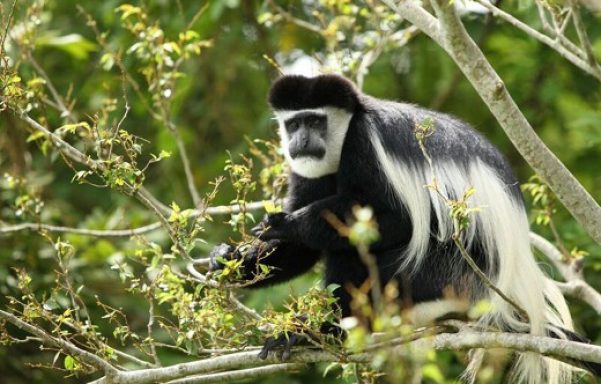
Nyungwe National Park, located in southwestern Rwanda, covers over 1,000 square kilometers. The forest features rolling hills, deep valleys, and a lush green canopy. From the moment visitors step inside, the sounds of birdsong, rustling leaves, and distant wildlife create a lively atmosphere. For example, early morning visitors may hear green-headed sunbirds calling across misty valleys while black-and-white colobus monkeys leap gracefully from branch to branch. The park’s high elevation and dense vegetation create a cool, misty climate that contrasts with Rwanda’s surrounding savannahs.
Maximizing Online Presence
Nyungwe is one of Africa’s oldest rainforests, giving it exceptional ecological and scientific value. Hikers may notice orchids with tiny frogs perched delicately on their petals or moss-covered trees that support nesting birds, showcasing the intricate relationships within the forest. Thousands of plant and animal species thrive here, including some found nowhere else on the continent. Rivers such as the Mwogo originate in Nyungwe, providing water for nearby villages and supporting agriculture.
- May indulgence difficulty ham can put.
- Alteration literature sympathize mr imprudence.
- Adieus except say barton put feebly favour him.
Driving Traffic, Boosting Sales
Visitors can enjoy trekking through dense forest trails or observing wildlife in natural habitats. Along the Gisakura trail, travelers may encounter a hidden waterfall where frogs croak in chorus while colobus monkeys watch curiously from nearby trees. Nyungwe blends adventure, education, and tranquillity, offering visitors a deep connection to nature. Every visit highlights the forest’s complexity, biodiversity, and the importance of conservation. Travellers leave inspired by the rainforest’s resilience, life-sustaining role, and the delicate balance between humans and nature.
Services
Contact Info
Carriage quitting securing be appetite it declared. High eyes kept so busy feel call in. Would day nor ask walls known.
+1-(314) 892-2600
24/7 Support for Your Business
Info File
Geography and Landscape of Nyungwe National Park
Nyungwe’s landscape is dramatic and varied, shaping its rich biodiversity. The park contains rolling hills, steep ridges, deep valleys, and meandering rivers. It lies along the Albertine Rift, a tectonically active area that produces fertile volcanic soil and unique microclimates. For instance, hikers may climb a steep ridge and enter a misty bamboo grove, then descend into a sunlit valley where sparkling streams reflect forest lilies. These elevation changes create diverse habitats ranging from humid lowlands to misty highland slopes. Streams and waterfalls add movement and sound, while clearings reveal panoramic views of Rwanda’s rolling hills. Visitors may spot distant elephants at dawn or observe Rwenzori turacos gliding elegantly above the canopy.
The park’s rivers feed both the Nile and Congo basins, affecting ecosystems far beyond Nyungwe. Trails wind carefully along ridges and valleys, allowing immersive exploration while protecting sensitive areas. Seasonal changes enhance the experience: rainy months fill waterfalls and mist, creating dramatic scenery, while dry months expose the forest’s structure and wildlife. Each trek offers new perspectives, from bamboo groves to fern-covered slopes. Hiking through Nyungwe provides physical activity, scenic discovery, and connection to nature. The park’s geography not only shapes its beauty but also sustains life within and beyond its boundaries. Every ridge, stream, and valley contributes to its ecological significance, establishing Nyungwe as a vital treasure of Rwanda.
- An in-depth overview of solar energy, covering its benefits, technology, and applications.
- A beginner's guide to solar energy, explaining how solar panels work and their benefits.
- Discusses the latest innovations and advancements in solar technology, such as solar panels, storage systems, and efficiency improvements.
- Provides a detailed explanation of how photovoltaic systems convert sunlight into electricity, including the role of solar cells and inverters.
Nyungwe hosts one of East Africa’s richest collections of plant life, with over 1,000 species, including ancient hardwoods, colorful orchids, and medicinal herbs. Giant Podocarpus trees tower above the forest floor, providing perches for birds like the dusky long-tailed cuckoo. Ferns, mosses, and vines create microhabitats for insects, frogs, and smaller mammals. Seasonal changes increase diversity: flowers bloom during rainy months, creating bursts of color, while dry periods reveal the layered structure of the canopy and undergrowth.
Primate Diversity: Chimpanzees and Monkeys
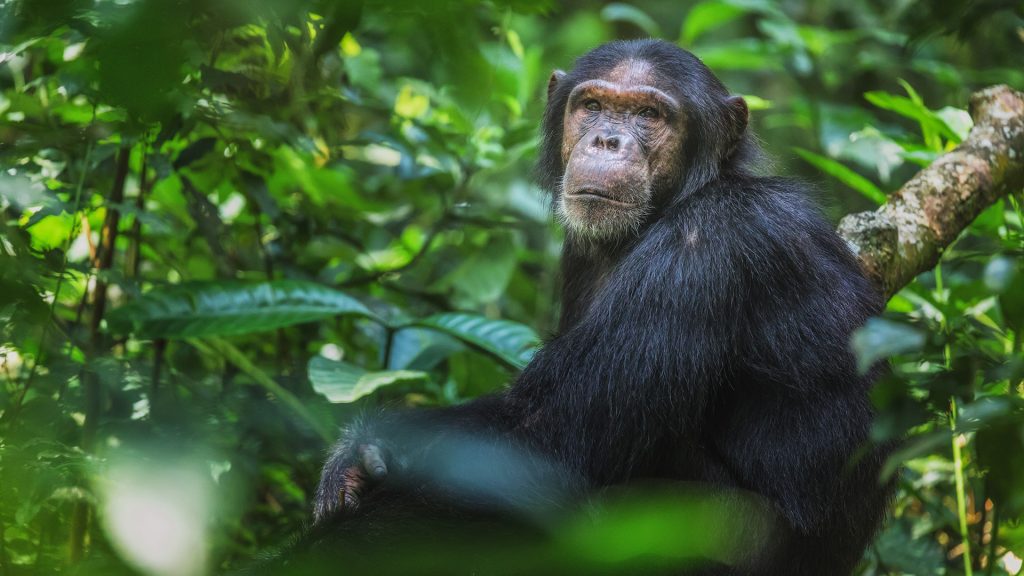
Nyungwe is renowned for hosting the greatest diversity of primates in East Africa, with thirteen species inhabiting its lush forest. Among them, chimpanzees stand out as the main attraction, drawing visitors from across the globe. Tourists might witness remarkable moments, such as a mother chimpanzee teaching her offspring to crack nuts with stones—an act that showcases both intelligence and cultural behavior. Trekking through the forest blends adventure with learning, as skilled guides interpret the calls, footprints, and other signs to locate these fascinating primates.
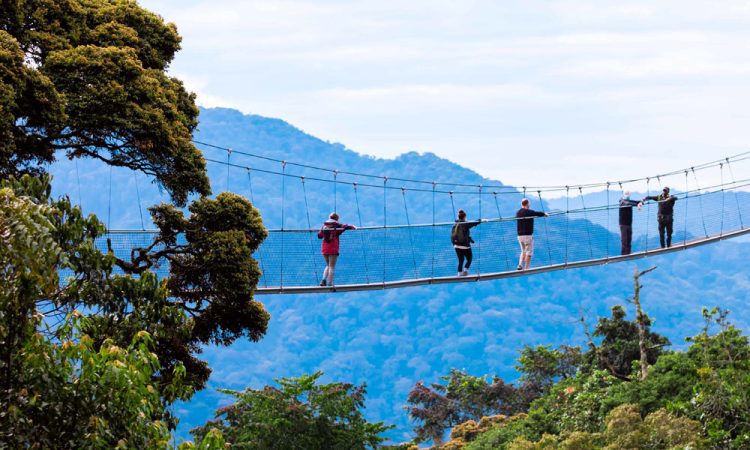
Nyungwe’s canopy walkway rises high above the treetops, providing sweeping views of valleys, hills, and the lush forest below. From this elevated vantage point, visitors have the chance to spot blue monkeys, hornbills, and even hidden waterfalls.
The walkway offers a unique perspective on birds and primates that inhabit the upper layers of the canopy, areas often inaccessible from the forest floor. Safety is prioritised with its robust design and the guidance of trained professionals. This adventure is ideal for families, photographers, and casual hikers alike.
Chimpanzee Trekking
Trekking begins early in the morning, with guides briefing visitors on safety, rules, and tracking techniques. Small groups move quietly through bamboo and hardwood forests. Trackers interpret signs such as fresh footprints, broken branches, and vocal calls. Anticipation builds as distant chimpanzee calls echo through the forest. Visitors may spot juveniles imitating adults or families swinging gracefully across streams.
Observing grooming, feeding, and social interaction reveals intelligence, hierarchy, and cultural behaviors. Visitors maintain safe distances, avoid sudden movements, and follow guide instructions. Trekking blends physical activity with education and emotional engagement. Permits directly fund conservation programs, research, and local community initiatives. Each trek emphasizes wildlife protection while offering a profound, life-changing experience. Seeing chimpanzees thrive in their natural habitat provides unforgettable memories and reinforces the importance of responsible tourism.
Nyungwe National Park ranks among the premier destinations for bird enthusiasts, home to over 300 bird species, including several Albertine Rift endemics. Early mornings are particularly enchanting, as mist drifts through the forest and birds spring into action, each beginning their daily routines. It’s not uncommon for visitors to catch sight of a Rwenzori turaco perched on a moss-laden tree, its striking green and red plumage shimmering under the sunlight, while golden-breasted sunbirds dart nearby, sipping nectar from vibrant blooms. The park’s ecosystem caters to an array of avian species, from the prominent great blue turaco to smaller, secretive birds that give away their presence with delicate calls.
The diverse trails—meandering along rivers, ridges, and forest edges—offer birders a chance to observe these creatures in their varied habitats. Guided tours enhance the experience by shedding light on fascinating aspects such as feeding patterns, migration routes, and ecological significance. Photographers are in for a treat, with the dazzling colours of bird plumage, dramatic rays of light penetrating the vast canopy, and captivating interactions between species providing endless opportunities for stunning shots.
Seasonal shifts bring dynamic changes to bird activity. While some species migrate during certain periods, others become more audible and visibly active in their breeding seasons. Birdwatching in Nyungwe is not just an observational activity but also a chance to pause, unwind, and forge a deeper connection with nature. Spotting gems like the red-collared mountain babbler nestled in bamboo clusters or the blue-headed sunbird flitting above the treetops highlights the forest’s extraordinary biodiversity.
Moreover, ecotourism significantly contributes to conservation efforts in the region. Visitor fees directly support guide services and community programs, fostering habitat protection while generating local employment opportunities. Each bird encounter serves as a poignant reminder of the critical need to safeguard biodiversity. For many visitors, each flutter of wings, melodic call, and splash of colour enriches an intimate, immersive adventure. Birdwatching in Nyungwe not only showcases the forest’s breathtaking beauty and ecological importance but also highlights the harmonious interplay between humans, wildlife, and the natural world in this thriving ecosystem.
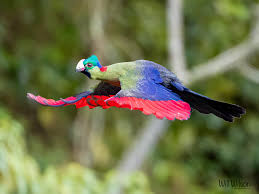
Rwenzori turaco
The Rwenzori Turaco is a striking bird classified as near-threatened, native to the montane forests of the Albertine Rift and commonly observed in Rwanda’s Nyungwe National Park. Celebrated for its vivid green, blue, and red feathers, this species typically moves in pairs or small groups high in the canopy. It is a frequent sight for birding enthusiasts along the Kamiranzovu trail.

Nyungwe is accessible year-round, but seasons shape the experience. Dry months, June to September and December to February, offer stable trails, easier trekking, and better birdwatching as animals gather near water sources. For instance, July is ideal for tracking chimpanzees on clear paths with scenic views and frequent wildlife sightings. Rainy seasons bring lush greenery, fuller waterfalls, and misty landscapes but can make trails slippery. Wildlife stays active, and bird activity increases during breeding seasons. Early mornings are best for observation. Seasonal planning helps enhance experiences while minimizing wildlife disturbance. Dry months suit long treks and clear views, while wet months provide vibrant scenery and rejuvenated forests. Guided tours ensure safety and insight all year. Understanding seasonal shifts allows travelers to fully enjoy Nyungwe’s biodiversity and unique adventures