
- admin
- April 5, 2026
- 4x4 Self drive Tours
Why Tanzania Attracts More Tourists Than Any Other Country in East Africa
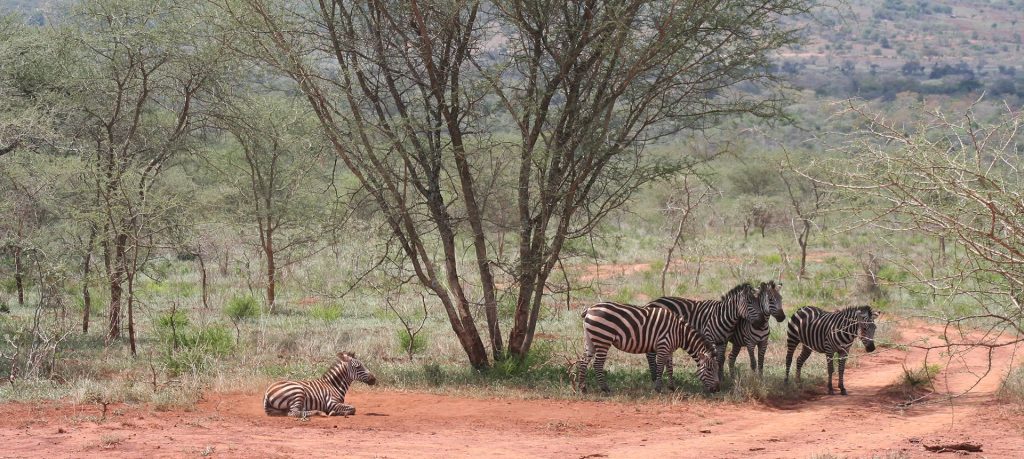
An In-Depth Look at Tanzania’s Unrivalled Tourism Appeal in the East African Region
When travellers search online for the best safari destinations in East Africa for first-time visitors, one name consistently rises to the top: Tanzania. Year after year, this East African giant outperforms its neighbours — Kenya, Uganda, Rwanda, and Ethiopia — in international tourist arrivals, foreign exchange earnings from tourism, and global destination rankings. According to the United Nations World Tourism Organization (UNWTO) and the Tanzania Tourism Board, Tanzania welcomed over 1.5 million international tourists in recent years, a figure that continues to climb despite global economic pressures.
But what makes Tanzania the undisputed tourism giant of East Africa? The answer lies in a powerful combination of world-class wildlife experiences, dramatic landscapes, rich cultural heritage, and strategic government investment in the tourism sector. This article explores — with concrete examples and data — the key reasons why Tanzania dominates East African tourism and why travellers from Europe, North America, Asia, and beyond keep choosing it over its neighbours.
The Serengeti: The World’s Most Iconic Wildlife Safari Destination
No single attraction does more for Tanzania’s tourism dominance than the Serengeti National Park. Travellers searching for affordable Serengeti safari packages with guaranteed Big Five sightings find that Tanzania offers something no other East African country can match at the same scale. Spanning approximately 14,750 square kilometres, the Serengeti is home to over 70 large mammal species and 500 bird species, offering a wildlife density that is virtually unmatched anywhere on Earth.
The annual Great Migration of wildebeest and zebras in Tanzania — a spectacle involving over 1.5 million wildebeest, 200,000 zebras, and 500,000 gazelles — is widely described as one of the Seven Wonders of the Natural World. This migration moves in a circular pattern through the Serengeti and into Kenya’s Masai Mara, but Tanzania hosts the majority of this journey, including the dramatic river crossings at the Grumeti River. Tourists travel from as far as Japan and Canada specifically to witness this event, making Tanzania their primary East African stop.
While Kenya’s Masai Mara also benefits from the migration, the experience begins and largely unfolds on Tanzanian soil, giving Tanzania a decisive competitive advantage when it comes to attracting travellers looking for luxury wildlife camps along the Great Migration route.
Kilimanjaro: The Ultimate African Mountain Trekking Experience
Mount Kilimanjaro — Africa’s highest peak at 5,895 metres above sea level — is a global bucket-list destination in its own right. Thousands of adventure travellers search annually for beginner-friendly routes to climb Kilimanjaro without prior mountaineering experience, and Tanzania caters expertly to this market. With six established routes — including the popular Marangu, Machame, and Lemosho routes — the mountain attracts roughly 50,000 climbers annually.
No other East African country possesses an attraction of this scale or global brand recognition. Uganda’s Rwenzori Mountains and Kenya’s Mount Kenya attract climbers but lack the gravitational pull that the name “Kilimanjaro” commands on the world stage. For many international visitors, a Tanzania trip combines a Kilimanjaro climb with a Serengeti safari — a two-in-one East Africa adventure itinerary that no other single country in the region can offer.
Zanzibar: The Perfect Beach Holiday Extension After a Tanzania Safari
Tanzania’s trump card in the East African tourism competition is its ability to offer both a premier wildlife safari and a world-class beach holiday within the same trip. The Zanzibar Archipelago — a semi-autonomous region of Tanzania — consists of the islands of Unguja (commonly called Zanzibar), Pemba, and Mafia, all fringed by turquoise waters, white sand beaches, and coral reefs. Travellers hunting for best all-inclusive beach resorts in Zanzibar after a safari are rewarded with a seamless, short flight from Dar es Salaam or Arusha.
Stone Town, Zanzibar’s historic capital and a UNESCO World Heritage Site, adds a rich layer of cultural tourism to the mix. Its labyrinthine alleyways, Arab-influenced architecture, spice markets, and the legacy of the ancient Swahili trade routes make it one of the most atmospheric urban destinations in Africa. This combination of wildlife, beach, and culture — all within one country — is something Kenya, Rwanda, Uganda, and Ethiopia simply cannot replicate in a compact, tourist-friendly format. Travellers who want maximum flexibility can easily self-drive from Dar es Salaam or Arusha before island-hopping to Zanzibar.
Unmatched Diversity of National Parks and Conservation Areas
Tanzania is home to 22 national parks, 29 game reserves, 40 controlled conservation areas, and 2 marine parks — a network that covers nearly 38% of the country’s total land area. This makes Tanzania one of the most conservation-committed nations on earth and a magnet for travellers seeking off-the-beaten-path Tanzania national parks beyond the Serengeti.
Beyond the Serengeti, Tanzania’s park portfolio includes the Ngorongoro Crater — the world’s largest intact volcanic caldera and a UNESCO World Heritage Site, often described as a natural zoo; Tarangire National Park, famous for its massive elephant herds and ancient baobab trees; Ruaha National Park, one of Africa’s largest and most remote parks; the Selous Game Reserve (now Nyerere National Park), which is larger than Switzerland; and Gombe Stream National Park, made world-famous by Dr. Jane Goodall’s chimpanzee research. This extraordinary variety allows Tanzania to attract specialist tourists — from photographers and ornithologists to primatologists and conservation volunteers — that other East African countries struggle to capture.
Strong Government Investment in Tourism Infrastructure
Tanzania’s tourism success is not accidental — it is the product of deliberate and sustained government investment. The Tanzania Tourist Board (TTB) actively markets the country at major global tourism expos including ITB Berlin, World Travel Market London, and the Arabian Travel Market. The government has invested heavily in airport upgrades, particularly Julius Nyerere International Airport in Dar es Salaam and Kilimanjaro International Airport, making Tanzania more accessible for long-haul international travellers.
Tanzania has also been proactive in developing visa-on-arrival policies and, more recently, the East Africa Tourist Visa — a single visa allowing entry into Kenya, Uganda, and Tanzania — which has boosted arrivals across the region. However, Tanzania’s superior infrastructure within parks, including well-maintained lodges, airstrips, and roads to key attractions, ensures that once tourists arrive, they enjoy a seamless experience. For independent travellers, self-drive car hire services operating across Tanzania and East Africa remove a further barrier, making it easier than ever to explore the country’s parks on a personalised schedule.
Cultural Richness: The Maasai, Swahili Heritage, and Living Traditions
Tanzania is home to 120 ethnic groups and one of the most harmonious multi-ethnic societies in Africa. The country’s cultural tourism offering is as diverse as its wildlife. The Maasai people — who straddle the Tanzania-Kenya border — have become one of the most globally recognised indigenous communities, and Tanzania offers numerous authentic Maasai cultural experiences near the Serengeti and Ngorongoro. These experiences, when offered responsibly, allow tourists to engage directly with semi-nomadic pastoral traditions that have survived for centuries.
Tanzania’s Swahili Coast heritage — deeply intertwined with Arab, Persian, Indian, and Portuguese influences — gives the country a cultural depth that enriches the overall tourist experience. The country also boasts a reputation for political stability and friendliness toward foreigners. Unlike some of its neighbours, Tanzania has maintained peace and democratic continuity since independence in 1961, something that weighs heavily in the minds of risk-conscious international travellers.
A Flourishing Luxury and Eco-Tourism Market
Tanzania has successfully positioned itself in the high-value, low-volume luxury tourism segment — a strategy that maximises revenue while minimising environmental impact. World-renowned luxury safari operators such as &Beyond, Singita, Four Seasons Safari Lodge, and Nomad Tanzania offer premium tented camps and lodges throughout the Serengeti and surrounding areas. Travellers researching top luxury eco-lodges in the Serengeti for a honeymoon safari will find an almost unparalleled range of options, from private conservancy camps to treehouse lodges and hot air balloon glamping experiences.
This luxury positioning also drives tourism revenue far above what raw arrival numbers might suggest. A single tourist spending ten nights at a premium Serengeti camp can contribute tens of thousands of dollars to the local economy, supporting conservation funding, community development programmes, and local employment — a virtuous cycle that Rwanda has attempted to replicate (notably with its high-cost gorilla permits) but which Tanzania achieves at a far larger and more diverse scale.
Gorilla Trekking and Primate Tourism: A Growing Competitive Edge
While Rwanda and Uganda are traditionally associated with mountain gorilla trekking, Tanzania competes effectively in the primate tourism market through its chimpanzee trekking experiences. Gombe Stream National Park and Mahale Mountains National Park — both accessible via Lake Tanganyika — offer some of the most intimate and wild chimpanzee encounters anywhere in Africa. Travellers debating chimpanzee trekking in Tanzania versus gorilla trekking in Uganda or Rwanda often find that Tanzania’s remote, unspoiled settings give the experience an added sense of adventure. For those who want to combine both, cross-border road trips connecting Tanzania, Uganda, and Rwanda via a one-way self-drive rental have become an increasingly popular option. Combined with the broader Tanzania itinerary, these primate destinations add another string to an already formidable tourism bow.
Conclusion: Tanzania’s Tourism Supremacy Is Built on Irreplaceable Assets
Tanzania’s dominance in East African tourism is the result of a rare convergence of irreplaceable natural assets, cultural richness, strategic infrastructure investment, and political stability. No other country in the region can offer, within a single itinerary, the scope of experience that Tanzania provides — from the spectacle of the Great Migration and the summit of Kilimanjaro, to the spice-scented alleyways of Stone Town and the crystalline waters of the Indian Ocean.
For travellers planning their first or fiftieth visit to Africa, Tanzania offers something profoundly compelling: the sense that they are visiting a place where the wild heart of the continent still beats at full strength. Whether you arrive on a guided group tour or choose a self-drive safari across Tanzania’s Northern Circuit in a fully equipped 4×4, the experience consistently exceeds expectations. As long as Tanzania continues to protect its natural heritage, invest in its tourism infrastructure, and engage local communities in conservation, it will remain East Africa’s — and one of the world’s — greatest travel destinations.
Whether you are searching for the best time of year to visit Tanzania for the wildebeest migration, planning a Tanzania family safari with young children, or comparing Tanzania vs Kenya as an East Africa safari destination — the answer, more often than not, begins and ends in Tanzania.
Most Popular
- All Posts
- 4x4 Self drive Tours
- Adventure Safaris
- East Africa Tours
- Wildlife Tours
It presents a wrist-hugging oval of gold, punctuated with.