
the Great Migration in Tanzania
Best Time to See the Great Migration in Tanzania on a Luxury Safari (2026/2027 Guide)
The Great Wildebeest Migration in Tanzania’s Serengeti National Park remains one of the most extraordinary wildlife spectacles on the planet. More than 1.5 million wildebeest, alongside hundreds of thousands of zebras and gazelles, trace a continuous circular route across the Serengeti-Mara ecosystem in search of fresh grazing and water — covering a staggering 3,000 kilometres each year.
For discerning travellers planning a luxury migration safari in Tanzania, timing is far more than simply choosing the right month. It demands strategic positioning across the correct region, selecting the finest ultra-luxury tented camps that reposition in line with herd movement, and designing an itinerary that minimises vehicle congestion while maximising raw wildlife drama.
This 2026/2027 guide tells you precisely when and where to experience the Great Migration in Tanzania in genuine luxury style — from the calving season in Ndutu to the iconic Mara River wildebeest crossings in northern Serengeti.
Understanding the Great Migration Cycle in Tanzania
The migration is not a single event confined to one season. It is a year-round phenomenon driven by rainfall patterns and the relentless search for grazing. The Serengeti ecosystem — stretching from the southern Ndutu Plains through the western Grumeti corridor and north to the Lamai Wedge and Mara River — hosts the herds at different stages throughout the calendar.
A well-planned Tanzania luxury migration safari is built around fly-in transfers between seasonally positioned camps, allowing guests to track the herds without sacrificing time or comfort.
January to March — Calving Season in Southern Serengeti and Ndutu
Why This Is One of the Most Compelling Times to Visit
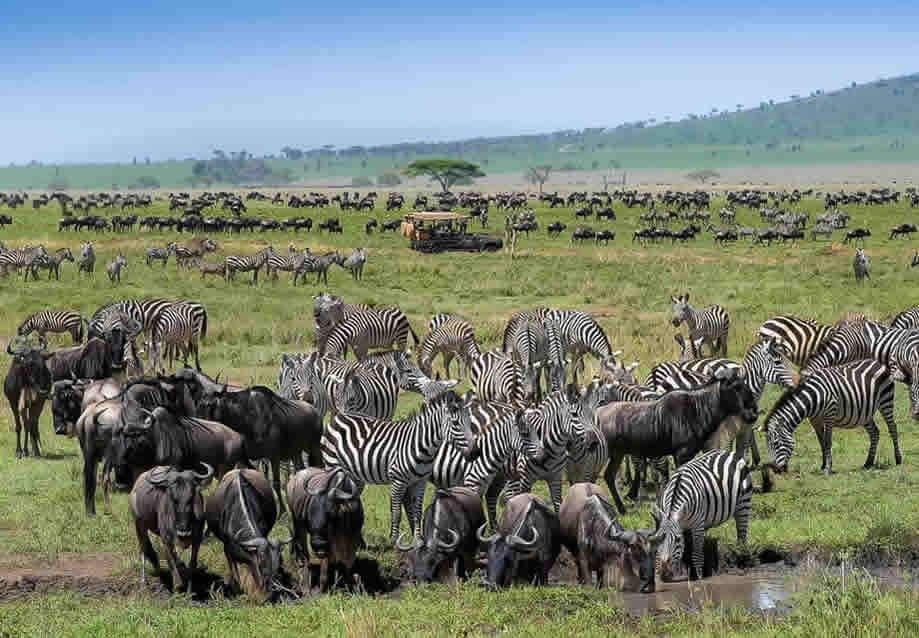
From January through March, the herds congregate on the short-grass plains of the southern Serengeti and the Ndutu region, bordering the Ngorongoro Conservation Area. This is calving season. Approximately 500,000 wildebeest calves are born within a compressed two-to-three-week window in February — one of the most concentrated wildlife birth events on Earth.
The open, expansive landscape of the Ndutu Plains in Tanzania offers unobstructed sightlines across vast distances. Predator activity reaches its annual peak as lions, cheetahs, leopards, and hyenas converge on the vulnerable newborns.
Luxury Advantages During Calving Season
The southern Serengeti is ideal for travellers who prioritise photographic luxury safaris in Tanzania and dramatic predator-prey interactions. Ultra-luxury tented camps including Ang’ata Migration Camp Ndutu, Sanctuary Kichakani Serengeti Camp, and Ndutu Luxury Tented Lodge are strategically positioned to place guests within close proximity to the calving action.
Because the herds spread across wide open plains rather than concentrating at river crossing points, vehicle density is typically more dispersed. The lush green season scenery produces exceptional photographic contrast — a bonus for guests combining their safari with professional wildlife photography workshops.
Book early: Camps in the Ndutu area fill quickly for January and February departures.
April to May — Green Season Migration Across Central Serengeti
Movement Begins Northward Through the Western Corridor
During April and May, the herds start their northwest journey from Ndutu through central Serengeti toward the western corridor. Rainfall may be heavier, but vegetation is vivid and crowd levels drop significantly.
Why Experienced Luxury Travellers Choose This Period
This is shoulder season in the truest sense — quieter camps, reduced vehicle numbers at sightings, and more competitive rates at some of Tanzania’s finest properties. The central Serengeti around Seronera remains a year-round predator stronghold, with lion, leopard, and cheetah sightings consistently excellent regardless of migration positioning.
For guests who place private exclusive safari experiences in Tanzania above peak drama, April and May offer a refined, unhurried atmosphere. Birdwatching is exceptional during the green season, with migratory species adding depth to game drive itineraries.
Serengeti Great Migration
The Most Sought-After Phase of the Great Migration
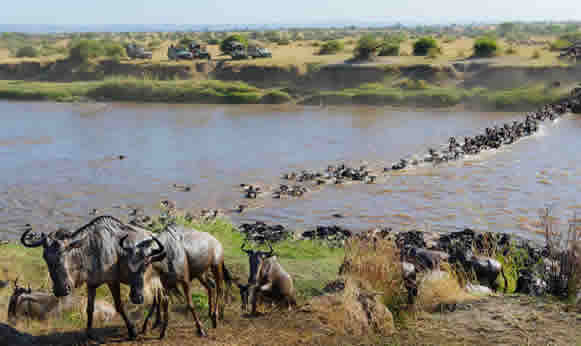
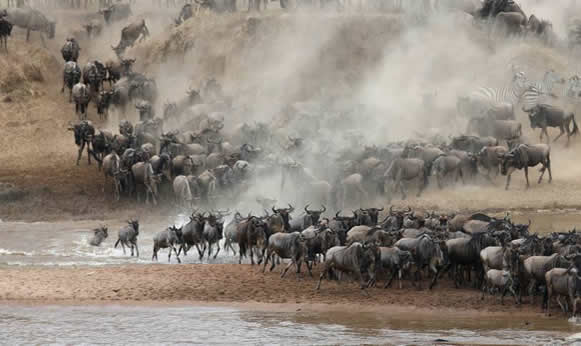
Between July and early October, the herds move into the northern Serengeti, gathering along the steep banks of the Mara River in the Lamai Triangle. This is when the iconic river crossings occur — wildebeest gather in vast numbers before making sudden, chaotic plunges into crocodile-filled water. The sight of thousands of animals crossing simultaneously, with massive crocodiles surging from the depths, is unlike anything else in nature.
Late July to early September is widely regarded as the peak time for Mara River wildebeest crossings in Tanzania, though crossing events are inherently unpredictable and can occur multiple times per day or not at all for several days.
Top Luxury Camps for Mara River Crossing Safaris in 2025/2026
Strategic lodge selection is critical during this high-demand period. Camps in the Lamai Triangle and along the Mara River consistently outperform in terms of proximity to crossing points:
- Sayari Camp (Asilia Africa) — The first permanent luxury camp established in northern Serengeti (2009), positioned close to the Lamai Wedge. Fifteen spacious tents inspired by the Kuria people’s culture, with a rim-flow swimming pool overlooking the plains. Carbon-neutral and 80% staffed by local communities.
- Lamai Serengeti (Nomad Tanzania) — Situated on the Kogakuria Kopjes with panoramic views, approximately 30 minutes from key Mara River crossing points. Renowned for exceptional guiding standards.
- Singita Mara River Tented Camp — Just six ultra-luxury tents on a dramatic riverbend in the Lamai Triangle, powered entirely by solar energy. Afro-bohemian interiors incorporate Maasai colour palettes and work by young African designers. One of the most exclusive settings on the entire migration circuit.
- Serian’s Serengeti Lamai — An intimate mobile camp positioned just one kilometre from Mara River Crossing Point 4, offering eight tents and two family suites among fig trees on the Lamai Wedge.
- TAASA Migration Camp — A new mobile luxury camp opening July 2025, offering twelve opulent tents that reposition three times per year to follow the herds precisely.
Critical planning note for 2026: Premium northern Serengeti camps regularly book out 12 to 18 months in advance for July to September departures. Guests planning a 2026 luxury Great Migration safari in Tanzania should confirm reservations without delay.
Most Popular
- All Posts
- 4x4 Self drive Tours
- Adventure Safaris
- East Africa Tours
- Wildlife Tours
October to November — Southern Return Through Central Serengeti
Herds Begin Their Journey Back to the South
By October and November, the migration begins tracking southward through central and eastern Serengeti. Large Mara River crossing events diminish, but wildlife density across the ecosystem remains high. Resident predator populations in central Serengeti — particularly in the Seronera Valley — produce consistent year-round sightings.
Why This Period Appeals to Discerning Travellers
Vehicle numbers fall sharply compared to the peak July-September window. For guests who value uncrowded private game drives in Tanzania’s Serengeti, October and November represent an excellent balance of strong wildlife activity with reduced visitor pressure. Rates at northern camps also ease as demand softens.
The transition months favour travellers combining the Serengeti with a Tanzania northern circuit itinerary — pairing migration positioning with the Ngorongoro Crater, Tarangire National Park, and a beach extension to Zanzibar.
Choosing the Right Time for Your Luxury Migration Safari in Tanzania
There is no single universally “best” month — the ideal timing depends entirely on what you want to experience.
- Best time for Mara River wildebeest crossings in Tanzania: Late July through September, northern Serengeti (Lamai Triangle)
- Best time for calving season safari in Ndutu, Tanzania: January through February, southern Serengeti
- Best time for exclusive low-season safari in the Serengeti: April, May, or October to November
- Best time for Grumeti River crossing luxury safari: June to early July, western Serengeti corridor
In true luxury style, the most sophisticated itineraries combine two migration zones — for example, three nights in the southern calving grounds followed by a fly-in transfer to the northern Mara River corridor. This dual-zone approach hedges against the herds’ inherent unpredictability and delivers a more complete migration narrative.
Structuring a Multi-Region Luxury Migration Safari in Tanzania
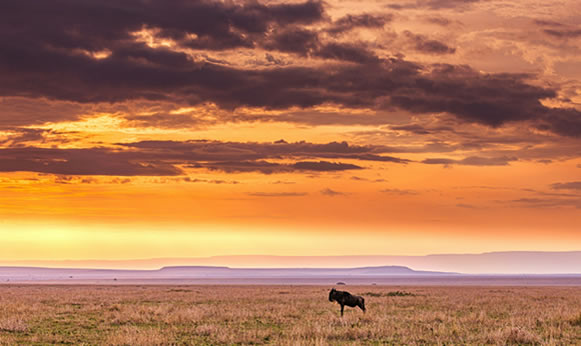
A well-engineered luxury migration itinerary in Tanzania typically involves fly-in transfers between camps, reducing ground travel time and preserving energy for game activities. The most effective structures allocate three to four nights in each migration zone, with seasonal intelligence informing final positioning closer to departure. Private vehicle allocation, dedicated expert guides, and camps with strictly limited guest capacities ensure flexible, crowd-free experiences. Many operators also integrate night game drives (available in private concessions), hot air balloon safaris at dawn over the Serengeti, and guided bush walks for guests seeking deeper wilderness immersion.
For travellers with 7 to 10 days, combining the Serengeti Great Migration with a full-day descent into the Ngorongoro Crater — home to Africa’s densest concentration of Big Five wildlife — creates one of the most comprehensive luxury wildlife itineraries in East Africa.
Practical Planning Notes for Tanzania Luxury Safari in 2026
- Book at least 12 months in advance for peak July-September northern Serengeti camps
- Fly-in access via chartered light aircraft from Arusha, Kilimanjaro International Airport, or direct between Serengeti airstrips (Lamai, Kogatende, Seronera) is standard for luxury circuits
- Conservation fees for Serengeti National Park are additional to accommodation rates and are non-negotiable; premium concession areas carry additional daily fees
- Sustainable luxury options have expanded significantly — Sayari Camp (carbon-neutral), Singita Grumeti (supporting the Grumeti Fund’s black rhino reintroduction programme), and TAASA Migration Camp all embed meaningful conservation commitments into their guest experiences
Featured safaris to the great wildebeest Migration

5 Nights | Tarangire → Lake Manyara → Ngorongoro
Best for: First-time safari-goers who want to experience the greatest variety of ecosystems and wildlife in one trip

8 Nights | Arusha → Tarangire → Lake Manyara → Ngorongoro → Arusha
Best for: Travellers with more time who want the complete luxury northern Tanzania experience — the full circuit with extended stays in each area and a variety of activities beyond game drives

6 Nights | Extended Tarangire → Karatu → Ngorongoro
Best for: Wildlife enthusiasts and repeat safari-goers who want to truly know Tarangire rather than pass through it, combined with a luxurious Ngorongoro experience
Conclusion
The Great Wildebeest Migration in Tanzania’s Serengeti National Park is a year-round phenomenon, but experiencing it through the lens of genuine luxury requires carefully calibrated seasonal planning. Each phase — from the breathtaking calving season in Ndutu to the heart-stopping Mara River crossings in northern Serengeti — carries its own distinct character, its own wildlife drama, and its own case for being extraordinary.
For travellers seeking the finest luxury Tanzania safari experiences in 2026 and 2027, the key is not simply selecting the right month but aligning the right region, the right camp, and the right expertise. With strategic planning, any phase of the Great Migration can become a deeply personal, profoundly memorable, and utterly world-class safari experience.
Blog
- 4×4 Adventures
- /
- Great Migration in Tanzania’s Serengeti