
- admin
- March 30, 2026
- 4x4 Self drive Tours
The First-Timer's Guide to Self-Driving East Africa: A Journey Through Five Nations
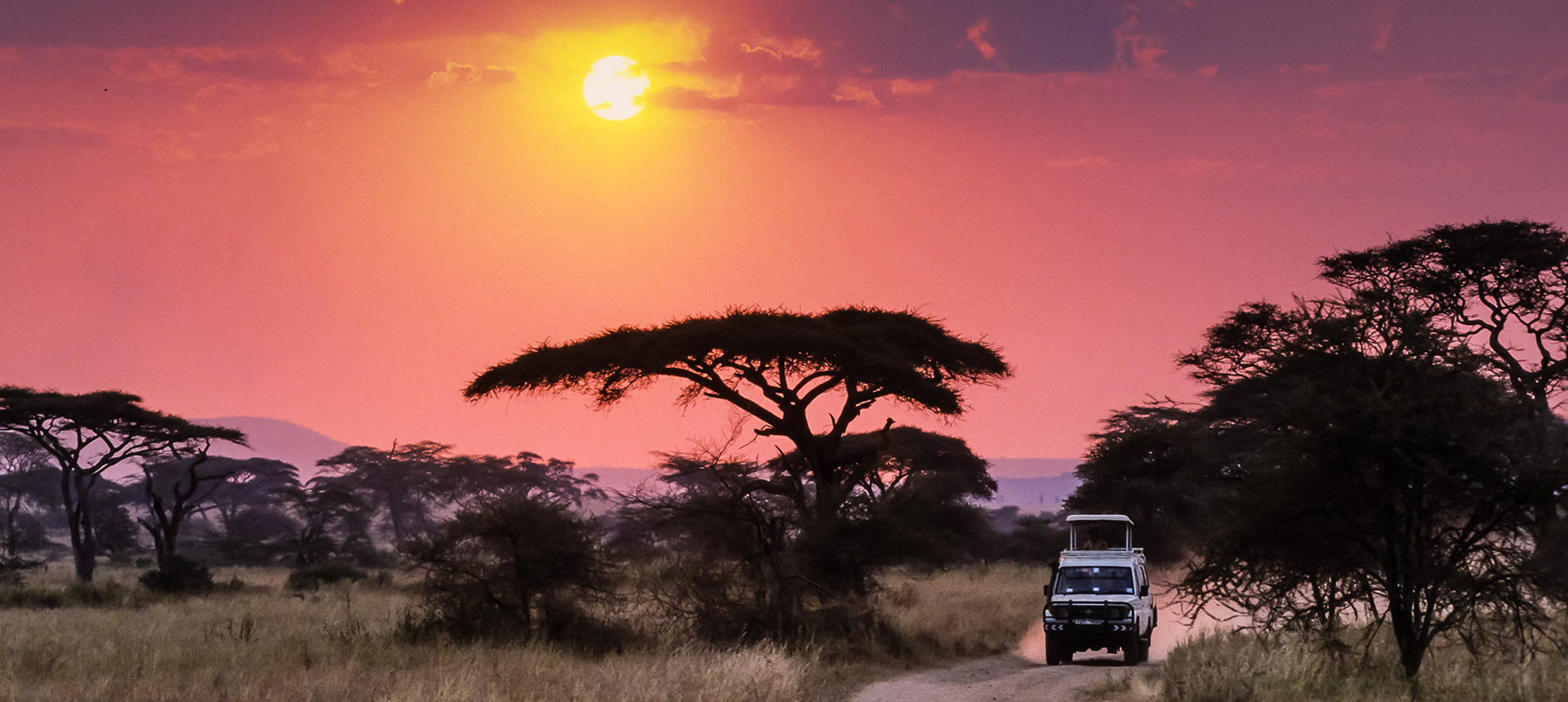
Dust on the windscreen, a lion in the grass, and no guide between you and the wild — this is East Africa on your own terms.
There is a particular freedom that belongs only to the self-driven traveller. No itinerary imposed from outside, no fixed departure time, no one to tell you when to stop watching the elephant who has wandered onto the road. In East Africa, this freedom is not just possible — for the curious, unhurried first-timer, it is the very best way to understand a continent that defies any single summary.
East Africa is not one landscape or one culture. It is a patchwork of savanna and highland, volcano and forest, fishermen and herders, ancient cities and brand-new highways. Driving it yourself means moving through these transitions slowly enough to feel them. You notice when the red Kenyan earth turns to the black volcanic soil of Tanzania. You sense the altitude climbing as you wind into Rwanda. You smell the papyrus swamps of Uganda before you see them.
This article is a full account of what a self-drive East Africa journey looks like — country by country, road by road — written for the traveller who has never done it before but suspects, correctly, that they should.
Before You Leave: The Essentials Every First-Timer Must Know
Self-driving in East Africa is genuinely achievable for anyone who has driven on challenging roads before, but it demands respect for the conditions. The region spans five countries — Kenya, Tanzania, Uganda, Rwanda, and Burundi — each with its own road character, border protocol, and park entry system.
Vehicle choice is the single most important decision you will make. A 4WD is not optional for park interiors. The Serengeti, Bwindi, Queen Elizabeth, and Murchison Falls all require clearance and traction that no saloon car can provide. A Toyota Land Cruiser or Toyota RAV4 is the regional standard; a Nissan Patrol is equally capable. If you are renting, choose a pop-up roof safari vehicle — you will understand why the moment you first spot a leopard.
International Driving Permits (IDP) are required alongside your home licence. Obtain one before departure from your national automobile association. Most East African countries recognise the IDP, but Rwanda and Kenya also accept a valid national licence from most Western countries — verify this with your car hire company.
Cross-border vehicle permits are essential when driving a rental across national frontiers. Not all rental companies allow cross-border travel; those that do will provide a letter of authority and, sometimes, a COMESA (Common Market for Eastern and Southern Africa) yellow card serving as insurance across member states.
Road conditions vary enormously. Rwanda’s roads are immaculate — probably the best-maintained in the region. Kenya’s major highways have improved dramatically. Tanzania’s park tracks are the most punishing, particularly the central Serengeti loop. Uganda has improved significantly but still harbours stretches in the north and west that will test your nerve.
Country One: Kenya — Where the Journey Traditionally Begins
Most first-timers fly into Nairobi, which makes Kenya the natural starting point. This is no hardship. Kenya is, in many ways, the most self-drive-friendly country in the region.
Nairobi is a genuine city with genuine city traffic — chaotic at rush hour, surprisingly manageable at other times. Stock up here. Fill your jerry cans (fuel availability in parks is unreliable), load your cooler box, and invest in a physical map alongside your GPS. Mobile data drops in remote areas, and the last thing you want is to be navigating the Maasai Mara without a map.
The drive southwest from Nairobi to the Maasai Mara National Reserve takes roughly five to six hours via the B3 highway through Narok. This is already a journey worth savouring. The escarpment drops you into the Rift Valley with a view that has made grown travellers pull over and simply stand. The valley floor — a broad, flat depression where flamingos stand in pink thousands on the alkaline lakes — stretches to the distant wall of the western escarpment. You are already in the wild before you reach any park gate.
The Mara itself is Kenya’s crown jewel for a reason. Between July and October, the Great Migration pours across from Tanzania — a seething column of wildebeest, zebra, and gazelle crossing the Mara River in scenes of terrible beauty. Outside migration season, the resident predator population is among the densest in Africa: lions are almost guaranteed, leopard sightings are common, and cheetah stake their claims on the open grassland.
Self-driving the Mara requires patience and map literacy. The tracks are numerous, some leading to spectacular clearings and some leading to mud. Stay on designated tracks within the reserve, and always be inside your accommodation by the park curfew — gates close at dusk.
From the Mara, many travellers loop east to Amboseli National Park, where Mount Kilimanjaro provides its famous backdrop to large elephant herds. The mountain is technically Tanzanian, but the view from Amboseli’s floor — elephants silhouetted against the snow-capped peak on a clear morning — is arguably the most iconic image in African wildlife photography.
The road from Amboseli southeast leads to the border crossing at Namanga, your gateway into Tanzania.
Country Two: Tanzania — The Serengeti, Ngorongoro, and the Soul of the Safari
Tanzania demands the most of the self-drive traveller and rewards accordingly. The distances are vast, the park tracks demanding, and the wildlife density breathtaking. Enter through Namanga and you will soon find yourself on the road toward Arusha, the northern safari capital.
Arusha is an excellent base for resupply and route planning. The city sits at the foot of Mount Meru and holds a relaxed energy that Nairobi does not — it is smaller, the traffic more forgiving, and the coffee excellent. The drive from Arusha to the Ngorongoro Crater takes about two and a half hours on well-maintained tarmac, climbing into the cool highlands of the Crater Highlands.
The Ngorongoro Crater is a collapsed volcanic caldera 19 kilometres across, and the density of wildlife within it is staggering. Because the crater walls act as a natural enclosure, the animals do not migrate out — they remain year-round. Self-driving inside the crater is permitted with a licensed vehicle, and the circuit road traces the caldera floor past hippo pools, flamingo-edged soda lakes, black rhino in the long grass, and lion prides sprawling on the kopjes. You will spend a full day here and still feel you left too soon.
The drive northwest from Ngorongoro into the Serengeti is one of the great transitional drives in Africa. The road climbs over the crater rim and then descends into an immensity of grass that stretches to the horizon without interruption. There is a moment, usually around Naabi Hill Gate, when you crest a rise and the Serengeti simply opens in front of you, flat and golden and apparently endless. Stop the engine. Listen.
Self-driving the Serengeti requires a strategic approach because the park is enormous — 14,763 square kilometres. The central Seronera area is the most accessible and the most reliably productive for wildlife. The northern Mara region rivals Kenya’s Mara directly across the border, but the track is rough and the distances long. Plan at least three nights in the Serengeti to properly explore.
For those who wish to end their Tanzania leg at the coast, Zanzibar is reachable by ferry from Dar es Salaam — though the self-drive stops at the water’s edge, the island rewards a few days of rest before the next overland leg.
Country Three: Uganda — The Pearl of Africa
Uganda is, by common consensus among East Africa’s most seasoned travellers, the most underrated country in the region. The British colonial administrator Winston Churchill called it the Pearl of Africa, and the name has stuck — not from national pride alone, but because Uganda genuinely glitters with variety. The Nile runs through it. Mountain gorillas live in its impenetrable forests. The world’s most powerful waterfall accessible by road is here.
Enter Uganda from Rwanda via the Katuna-Katonga border crossing, or from Kenya via Malaba or Busia in the east. The road from Kampala west toward the parks is one of the great scenic drives of the region.
Kampala is a city of hills — literally built across seven — and navigating it demands alertness. The boda-boda motorbike taxis that weave through traffic follow their own rules, and matatu minibuses stop without warning. Use the morning hours to resupply and save your park driving for afternoon arrival.
The drive southwest to Queen Elizabeth National Park takes about five hours from Kampala. The park straddles the Equator and holds a remarkable diversity for its size: tree-climbing lions in the Ishasha sector (a genuinely unusual behaviour seen in very few places worldwide), hippo-thick channels accessed by boat launch on the Kazinga Channel, and elephant in large numbers across the savanna.
From Queen Elizabeth, the road southwest leads to Bwindi Impenetrable National Park, home to roughly half the world’s remaining mountain gorilla population. Gorilla trekking here requires a permit — booked months in advance — but once granted, the encounter is utterly unlike any other wildlife experience on Earth. You track on foot through dense montane forest for anywhere between thirty minutes and eight hours, guided by rangers reading knuckle prints and bent branches. When you find the group, you have one hour. That hour changes people.
North of Kampala, Murchison Falls National Park anchors the northern safari circuit. The falls themselves — the Nile compressed through a seven-metre slot of rock with such force that the spray is visible from kilometres away — are worth the drive alone. The north bank game drive delivers elephant, giraffe, and lion in numbers. A launch trip up the Nile to the base of the falls, watching hippo and Nile crocodile from the water’s surface, is among the finest excursions in all of East Africa.
Uganda’s roads have improved considerably in recent years. The Kampala-Masaka highway is smooth and fast. The road to Bwindi deteriorates as it climbs, and the final descent into the park can be genuinely treacherous after rain — a 4WD with good tyres is non-negotiable.
Country Four: Rwanda — The Land of a Thousand Hills
Rwanda is the surprise of East Africa. A country smaller than Belgium, it has transformed itself in three decades into one of the most ordered, cleanest, safest, and most scenically dramatic nations on the continent. Self-driving Rwanda is, frankly, a pleasure — the roads are excellent, the signage reliable, and the landscape so intensely beautiful that the driving itself becomes the attraction.
Enter from Uganda via the Gatuna-Katuna crossing in the north, or from Tanzania via Rusomo in the southeast.
Kigali, the capital, sits at the centre of the country and is a logical overnight stop. It is a genuinely striking city — hilly, green, spotlessly clean (a weekly community cleaning initiative called Umuganda has been national practice since the early 2000s), and equipped with excellent coffee culture and restaurants. The Kigali Genocide Memorial is a site every visitor should make time for — sobering, honest, and necessary for understanding modern Rwanda.
From Kigali, the road northwest through Ruhengeri to Volcanoes National Park is about two and a half hours of spectacular highland driving. The Virunga volcanoes rise ahead of you — six peaks, several still active, straddling the Rwanda-Uganda-DRC border. The park is Rwanda’s gorilla heartland. Permits here are the most expensive in the region, but the trek infrastructure is the most polished, and the experience itself is identical to Uganda’s.
The Nyungwe Forest in the southwest is Rwanda’s other great draw: an ancient montane rainforest harbouring chimpanzee, colobus monkey, and over 300 bird species. The canopy walk — a suspension bridge 70 metres above the forest floor — is an attraction in its own right. The drive to Nyungwe from Kigali takes around three to four hours via Butare, passing through terraced hillsides of tea and coffee that look, in the morning light, almost impossibly green.
Rwanda is the only country in the region where you can feel confident driving after dark — the roads are safe and well-lit in populated areas. Even so, animal crossings and pedestrian traffic on rural roads make daytime driving the wisest practice everywhere in East Africa.
Country Five: Burundi — East Africa’s Undiscovered Frontier
Burundi is the least visited of the five East African self-drive countries, and therein lies its appeal for the traveller who wants to step beyond the well-worn circuit. The country is small, hilly, French-speaking, and largely untouched by mass tourism. It requires more preparation, more flexibility, and more tolerance for the unexpected — and it rewards these things generously.
Enter from Rwanda via the Kanyaru crossing near Butare. The road descends from Rwanda’s cool highlands toward Bujumbura, the lakeside capital, and the descent is dramatic — the landscape falling away in terraces toward the long blue mirror of Lake Tanganyika, one of the world’s great Rift Valley lakes and the second-deepest lake on Earth.
Bujumbura sits on the lake’s northeastern shore and carries the unhurried atmosphere of a city still finding its post-conflict feet. The restaurants along the lake are excellent — Burundian cuisine is influenced by French colonial cooking and the fresh-water fish of Tanganyika — and the sunsets over the lake, with the mountains of the Democratic Republic of Congo rising on the far shore, are the kind that are spoken about quietly around campfires for years afterwards.
The Rusizi Delta north of Bujumbura offers boat trips through papyrus channels to spot hippo, crocodile, and water birds. The Kibira National Forest in the northwest — contiguous with Rwanda’s Nyungwe — holds chimpanzee and colobus monkey, though infrastructure here is minimal and the experience correspondingly raw.
It is worth being frank about Burundi: the country has a complex political history, and travellers should check their government’s current travel advisories before visiting. When conditions allow, it is a genuinely rewarding destination — precisely because so few other travellers are there.
Practical Planning: Seasons, Permits, and Money
The best time to self-drive East Africa is during the long dry season, June to October, when park tracks are firm, animals gather at water sources and are easier to locate, and the Great Migration is active in the Mara-Serengeti ecosystem. The short dry season, January to February, is also excellent, particularly for Tanzania.
The long rains of March to May make many park tracks genuinely impassable, particularly in the Serengeti and Uganda’s western parks. If you travel in this period, stay on tarmac routes and accept that park interiors may be inaccessible.
Park fees are paid per person per day in most countries, with vehicle fees additional. Budget carefully: a full week combining Kenya, Tanzania, and Uganda parks can run well over $500 per person in fees alone. Rwanda’s gorilla permits are priced at $1,500 each (as of the time of writing, though verify current pricing). Uganda’s gorilla permits are lower, making Bwindi the more budget-friendly option for primate trekking.
Currency varies — Kenya uses the Kenyan Shilling, Tanzania the Tanzanian Shilling, Uganda the Ugandan Shilling, Rwanda the Rwandan Franc, and Burundi the Burundian Franc. Most park entry fees can be paid by international card or USD cash. Carry both. ATMs are reliable in capital cities and largely absent in rural park areas. For flexible budgeting across borders, a one-way car rental can also save significantly on backtracking costs.
The Things No Guidebook Can Prepare You For
No account of self-driving East Africa would be complete without honesty about the moments that no itinerary anticipates. The puncture on a red dirt road fifty kilometres from the nearest town, fixed under the shade of an acacia while a troop of baboons watches with mild curiosity. The border crossing where your paperwork is inexplicably incomplete and three hours pass in a small concrete room while someone senior is found. The afternoon when the fuel gauge drops toward empty and the next village is further than the map suggested.
These moments are not disasters. They are, in retrospect, the moments that define the trip — the ones told and retold, that accumulate into the particular texture of a journey lived rather than managed.
East Africa on your own terms is a journey that belongs to first-timers precisely because you have not yet learned to underestimate it. Drive slowly. Stop often. Turn the engine off when something moves in the grass. Let the dusk come to you rather than racing back to camp before it falls.
The continent has been rewarding that kind of attention for a very long time.
Estimated total journey duration: 21–35 days for a full five-country loop · Recommended vehicle: Toyota Land Cruiser 4WD with pop-up roof · Best months: July–October or January–February
Most Popular
- All Posts
- 4x4 Self drive Tours
- Adventure Safaris
- East Africa Tours
- Wildlife Tours
Inspiring New Talent
It presents a wrist-hugging oval of gold, punctuated with.